
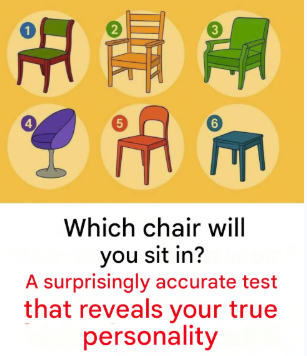
Imagine entering a quiet room where six different seats are arranged before you. No one gives you instructions. There is no correct answer, no time limit, and no practical reason to choose one seat over another. You simply look at them and feel drawn toward one.
Perhaps one seat appears more welcoming. Another may seem elegant, powerful, unusual, or reassuring. Your decision happens almost immediately, before you have time to analyze the shape, color, position, or design. That quick and instinctive reaction may seem insignificant, but it can reflect certain aspects of your personality.
Personality quizzes based on visual choices have an undeniable appeal. They invite us to pause, observe our reactions, and consider what our preferences might say about us. Sometimes the results seem surprisingly accurate. At other times, they simply offer an entertaining opportunity to reflect on qualities we may not notice in ourselves every day.
These exercises are not scientific psychological evaluations, and they should not be treated as fixed definitions of personality. Human beings are far too complex to be explained by a single choice. However, an instinctive preference can still reveal something interesting about your emotional needs, values, habits, and general approach to life.
Before reading the interpretations, imagine the six seats clearly. Try not to overthink your response. Which one attracts your attention first? Which seat would you choose if you had to sit down immediately?
Your first reaction may reveal more than you expect.
Seat 1: The Search for Harmony
If your attention was immediately drawn to Seat 1, you are likely someone who values calmness, balance, and emotional stability. You feel most comfortable in environments that are organized, peaceful, and predictable. Disorder does not necessarily frighten you, but you prefer situations in which everyone knows what is expected and unnecessary tension is avoided.
You may be the person who remains composed when others begin to panic. During stressful moments, you rarely react impulsively. Instead, you take a step back, assess the situation, and try to restore order. Your ability to stay calm often makes you appear stronger than you may feel inside.
People naturally turn to you when they need advice, reassurance, or a safe place to express their worries. You have a grounding presence that helps others slow down and think more clearly. Even when you do not have an immediate solution, your patience and steady manner can make a difficult situation feel more manageable.
You probably dislike unnecessary arguments and may go to great lengths to preserve peace. You prefer respectful communication over confrontation and often try to understand both sides of a disagreement. This makes you a natural mediator in family, friendship, and professional situations.
However, your desire for harmony can sometimes cause you to suppress your own emotions. You may remain silent because you do not want to disturb the peace, even when something genuinely bothers you. Over time, unspoken frustration can become emotionally exhausting.
Your challenge is to remember that harmony does not mean avoiding every uncomfortable conversation. True peace often requires honesty, clear boundaries, and the courage to express your needs. You can remain kind and calm while still standing up for yourself.
At your best, you are dependable, thoughtful, loyal, and emotionally steady. You create a sense of security wherever you go. Your strength is quiet rather than dramatic, but it is deeply appreciated by those who know you well.
Seat 2: The Soul of a Leader
Choosing Seat 2 suggests a decisive, ambitious, and action-oriented personality. You are not someone who enjoys waiting for others to make the first move. When you see an opportunity, you want to explore it. When you notice a problem, your instinct is to find a solution.
You feel energized by responsibility and often become the person who takes control when a group lacks direction. You know how to organize people, communicate a goal, and encourage others to keep moving forward. Even without an official title, you may naturally assume a leadership role.
Challenges rarely discourage you for long. In fact, difficult situations may awaken your determination. When someone tells you that something cannot be done, you often become even more motivated to prove that it can.
You are likely confident in your judgment and willing to make decisions under pressure. While others may hesitate because they fear making a mistake, you understand that progress sometimes requires calculated risk. You would rather learn from an imperfect decision than remain trapped in endless uncertainty.
Your energy can be inspiring. People may admire your courage, determination, and ability to create momentum. You are often the one who turns plans into action and ideas into visible results.
However, strong leadership can have a demanding side. You may become impatient with people who need more time, reassurance, or explanation. Because you are focused on the destination, you may occasionally overlook the emotional needs of those traveling with you.
You may also place enormous pressure on yourself. Leaders often believe they must always appear strong, capable, and certain. Yet constantly carrying responsibility can become tiring. You are allowed to ask for help, reconsider a decision, or admit that you do not have every answer.
Your greatest growth comes from balancing authority with empathy. The most respected leaders are not simply the loudest or most confident. They also know how to listen, delegate, recognize the strengths of others, and create space for different opinions.
At your best, you are courageous, motivating, resourceful, and visionary. You have the ability to open doors, inspire action, and guide others through uncertainty.
See more on the next page
Seat 3: Unfettered Creativity
If Seat 3 caught your eye, you likely have an imaginative, independent, and unconventional spirit. You are not satisfied with simply following a path because everyone else is walking on it. You need room to explore, experiment, and express yourself in your own way.
Rigid rules can make you feel restricted, especially when they exist without a clear purpose. You often question traditions, routines, and assumptions. Rather than accepting that something has always been done in a particular way, you wonder whether there might be a more interesting or effective alternative.
Your creativity may appear through art, writing, fashion, music, decoration, problem-solving, communication, or your general way of seeing the world. Even if you do not consider yourself artistic, you probably possess an original perspective that helps you notice possibilities others miss.
You are capable of making surprising connections between unrelated ideas. A conversation, image, memory, or ordinary object can inspire an entirely new thought. Your mind rarely travels in a perfectly straight line, and this is one of your greatest gifts.
Others may admire your originality and freedom of expression. You remind people that life does not always need to follow a predictable formula. Your willingness to be different can encourage others to become more honest about who they are.
At times, however, your dislike of restriction may make consistency difficult. You may begin projects with great enthusiasm but lose interest once the initial excitement disappears. Routine responsibilities can feel especially heavy when your mind is already searching for the next stimulating idea.
You may also feel misunderstood. People who prefer structure may describe you as unpredictable, unrealistic, or overly idealistic. Yet what they sometimes fail to recognize is that innovation often begins with someone willing to imagine what does not yet exist.
Your challenge is to give your creativity enough structure to become something tangible. Inspiration is powerful, but discipline allows your ideas to grow. A flexible plan, a realistic deadline, or a supportive routine can help you turn imagination into achievement without destroying your sense of freedom.
At your best, you are expressive, inventive, authentic, and inspiring. You bring freshness into familiar situations and help others see the world from a wider perspective.
Seat 4: Curiosity in Motion
Choosing Seat 4 suggests that you are curious, adaptable, and naturally attracted to new experiences. You enjoy discovery and often feel most alive when you are learning, exploring, or encountering something unfamiliar.
You do not necessarily need dramatic adventures to feel stimulated. A new book, an unexpected conversation, a different route home, or a small personal challenge may be enough to awaken your interest. You have the ability to find novelty in ordinary life.
Your open-mindedness helps you adapt when circumstances change. While others may resist unfamiliar situations, you are often willing to observe, experiment, and adjust. You understand that change can be uncomfortable, but you also recognize that it can create opportunities.
You probably enjoy asking questions. You want to know how things work, why people behave as they do, and what might exist beyond what you already understand. This quality can make you an engaging conversationalist because you are genuinely interested in ideas, experiences, and perspectives different from your own.
People may appreciate your flexibility and enthusiasm. You bring movement into stagnant situations and encourage others to consider possibilities they may have ignored.
However, constant curiosity can sometimes create restlessness. You may become bored quickly when life feels repetitive or predictable. Once something becomes familiar, your attention may shift toward a new subject, goal, relationship, or experience.
This can make long-term commitment challenging, not because you are incapable of loyalty, but because your mind needs continued growth. You thrive when stability still contains variety, learning, and movement.
Your challenge is to discover depth as well as novelty. Sometimes the most meaningful discoveries appear only after sustained attention. Returning to the same skill, relationship, or goal can reveal layers that are invisible at first glance.
At your best, you are adventurous, flexible, intelligent, and enthusiastic. You remind others that curiosity keeps the mind active and that even everyday life can contain unexpected wonder.
Seat 5: Vibrant Empathy
If you felt drawn to Seat 5, you are likely highly intuitive, compassionate, and emotionally perceptive. You notice subtle changes in tone, expression, and behavior. Even when someone says they are fine, you may sense that something deeper is happening.
You care deeply about the emotional well-being of others. Friends and family may feel comfortable sharing personal concerns with you because you listen without immediately judging or dismissing their feelings. Your attention makes people feel seen and understood.
You are not simply hearing words. You are noticing pauses, emotions, contradictions, and unspoken needs. This emotional awareness allows you to offer comfort in ways that feel sincere rather than automatic.
Your empathy is a powerful quality. It can strengthen relationships, reduce conflict, and create genuine trust. You may be especially sensitive to injustice, loneliness, or suffering because you can easily imagine what another person might be experiencing.
However, emotional sensitivity can also become overwhelming. You may absorb the moods of those around you and carry burdens that do not belong to you. After supporting others, you may feel drained without fully understanding why.
You might also struggle to say no. Because you do not want to disappoint or hurt anyone, you may offer help even when you are already exhausted. Over time, this can create resentment, fatigue, or emotional imbalance.
It is important to remember that empathy does not require self-sacrifice. You can care about someone without solving every problem for them. You can listen compassionately while maintaining boundaries. Protecting your own energy does not make you selfish; it allows you to remain genuinely supportive.
You may benefit from regular periods of solitude, rest, creative expression, or time in peaceful surroundings. These moments help you separate your own emotions from those you have absorbed from others.
At your best, you are warm, intuitive, generous, and deeply understanding. You help people feel less alone and bring emotional depth to every relationship you value.
Seat 6: The Elegance of Simplicity
Choosing Seat 6 often reflects a peaceful, practical, and methodical personality. You appreciate reliability, authenticity, and the quiet satisfaction of a life that feels stable and manageable.
You do not need constant excitement to feel fulfilled. Happiness may come from familiar routines, meaningful relationships, a comfortable home, completed responsibilities, and small moments of peace. You understand that an ordinary day can still be a good day.
You are probably careful in your decisions. Rather than rushing toward every new opportunity, you prefer to consider the practical details. You value security and want to know that your choices are sustainable.
Others may describe you as dependable because you usually keep your promises. You show care through consistency rather than dramatic gestures. When you say you will be there, people believe you.
You may also have a strong appreciation for simplicity in your surroundings. Clutter, confusion, and unnecessary complications can drain you. You prefer things that are functional, clear, and genuine.
Your stability makes you a reassuring presence. During uncertain times, people may turn to you because you help them return to what truly matters. You remind them to focus on realistic steps instead of becoming overwhelmed by distant possibilities.
However, your love of routine can sometimes make change feel threatening. You may remain in familiar situations longer than necessary because uncertainty seems more uncomfortable than dissatisfaction.
You might also underestimate your own ambition. Because you do not seek attention or dramatic recognition, others may overlook how much determination lies beneath your quiet manner.
Your challenge is to remain open to growth without abandoning the stability you value. Change does not always destroy peace. Sometimes it creates a stronger and more authentic version of it.
At your best, you are loyal, patient, practical, and sincere. You show that a meaningful life does not need to be loud. Simplicity can contain beauty, strength, and profound emotional richness.
See more on the next page
Why Are Instinctive Choices So Fascinating?
The appeal of visual personality tests comes partly from the principle of projection. Projection occurs when we interpret images, objects, or situations through the lens of our own thoughts, emotions, memories, and preferences.
When several choices are presented without detailed instructions, the mind begins assigning meaning to them. One seat may appear secure, another adventurous, another elegant, and another powerful. These impressions are influenced by personal experiences and emotional associations.
Your selection does not provide a scientific diagnosis, but it may highlight what currently feels important to you. A person seeking stability may notice a comfortable and balanced seat. Someone craving change may be drawn toward the most unusual option. A person who wants recognition may prefer a seat that appears bold or authoritative.
The same person might even choose differently at another stage of life. Preferences can change according to mood, experience, stress, confidence, and personal growth.
This is why such exercises are best used as invitations to reflect rather than final judgments. Instead of asking whether the interpretation is completely accurate, consider which parts feel familiar and why.
Can One Seat Describe Your Entire Personality?
No single choice can capture every part of a human personality. Most people contain qualities represented by several seats.
You may be calm like Seat 1 in professional situations but creative like Seat 3 in your private life. You may lead like Seat 2 when responsibility is required while showing the empathy of Seat 5 in close relationships.
You might value the simplicity of Seat 6 while still possessing the adventurous curiosity associated with Seat 4. Personality is not a rigid category. It is a changing combination of habits, values, reactions, strengths, fears, and experiences.
Your chosen seat may represent the quality that feels strongest at the moment. It may also reflect a quality you admire or wish to develop more fully.
What Your Choice Can Teach You
The true value of this exercise does not lie in receiving a label. It lies in becoming more aware of your natural tendencies.
If you chose harmony, ask yourself whether you express your needs clearly.
If you chose leadership, consider whether you make enough room for the voices of others.
If you chose creativity, think about how you can bring structure to your ideas.
If you chose curiosity, reflect on whether you allow yourself to explore subjects deeply.
If you chose empathy, consider whether you protect your emotional energy.
If you chose simplicity, ask yourself whether comfort is supporting your growth or quietly limiting it.
These questions can transform a lighthearted personality test into a useful moment of self-reflection.
Final Thoughts
Ultimately, it does not matter which seat called to you first. Every choice highlights a valuable way of approaching life.
The calm person creates stability. The leader creates momentum. The creative person opens new possibilities. The curious person keeps learning. The empathetic person creates connection. The practical person builds lasting security.
None of these personalities is better than another. Each one carries strengths, challenges, and opportunities for growth.
The smallest instinctive choices can sometimes reveal the values we carry quietly within ourselves. A preferred seat may not define your entire personality, but it can encourage you to notice what brings you comfort, motivation, inspiration, or meaning.
So think again about the six seats before you. Which one did you choose, and what might that choice be trying to tell you about the person you are today?
See more on the next page
