
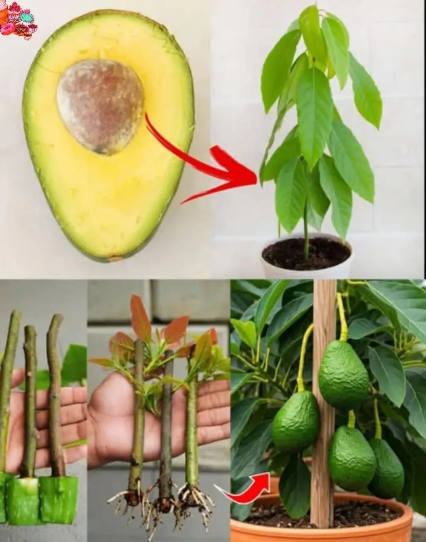
Growing an avocado tree at home is an interesting way to reuse the pit of a fruit that would otherwise be thrown away. Even without a garden, it is possible to germinate an avocado pit and grow an attractive green plant in a pot.
The process is simple, inexpensive, and suitable for beginners. However, growing an avocado tree from a pit requires patience. A seed-grown tree may take many years to produce fruit, and some indoor avocado trees may never bear avocados at all. Even so, the experience remains rewarding and educational.
Discover how to germinate an avocado pit, plant it correctly, care for the young tree, and avoid the most common growing problems.
Why Grow an Avocado Tree at Home?
Growing an avocado tree from a pit offers several potential advantages.
A Low-Cost Gardening Project
Instead of throwing the avocado pit away, you can use it to start a new plant. The main materials required are simple household items:
One fresh avocado pit
A glass or small container
Three or four toothpicks
Water
A flowerpot
Light, well-draining potting soil
This makes avocado germination an affordable introduction to home gardening.
It is important to remember, however, that growing a tree from a pit does not guarantee a regular supply of avocados. Commercial avocado trees are usually grafted so that they produce predictable fruit. A tree grown from seed may take a long time to mature and can produce fruit that differs from the original avocado.
An Ecological Way to Reuse Food Waste
Using an avocado pit gives new life to something that would normally end up in household waste. Although one homegrown tree will not eliminate the environmental impact associated with commercially imported avocados, it encourages a more thoughtful approach to food and gardening.
Growing plants at home can also help people develop a greater appreciation for the time, water, light, and care required to produce food.
A Rewarding Experience
Watching a hard avocado pit split open, develop roots, and produce its first green shoot can be fascinating. The plant changes gradually, making it especially interesting for children, beginner gardeners, and anyone who enjoys observing natural growth.
The process also teaches patience. Germination does not happen immediately, and the young plant must be cared for regularly.
Greater Control Over Growing Conditions
When you grow the plant yourself, you decide which soil, fertilizer, and care methods are used. You can choose organic potting soil and avoid unnecessary chemical treatments.
Nevertheless, an avocado tree grown from a pit should initially be considered an ornamental plant rather than a guaranteed source of organic fruit.
Choosing the Right Avocado Pit
For the best chance of germination, use a pit from a ripe, healthy avocado.
The pit should be:
Firm and undamaged
Free from deep knife cuts
Freshly removed from the fruit
Thoroughly cleaned before use
Try not to damage the brown outer skin when removing the pit. Small surface marks are usually not serious, but deep cuts can affect germination.
A fresh pit is more likely to germinate than one that has been allowed to dry out for several days.
Preparing the Avocado Pit
After enjoying the avocado, carefully remove the pit with a spoon. Avoid striking it forcefully with a knife, as this can damage the seed.
Wash the pit under lukewarm water to remove all remaining pulp. Avocado flesh left on the surface can encourage unpleasant odors, mold, or bacterial growth.
Do not use harsh cleaning products. Water and gentle rubbing are normally sufficient.
Once the pit is clean, identify its top and bottom.
The slightly pointed or narrower end is the top. This is where the stem will eventually emerge.
The wider, flatter end is the bottom. This part must face downward because the roots grow from this side.
Correct positioning is important. If the pit is placed upside down, germination may be delayed or unsuccessful.
Germinating an Avocado Pit in Water
The water method is popular because it allows you to observe the roots as they develop.
Insert three or four toothpicks into the sides of the pit. Space them evenly around the middle so that they can support the pit over a glass.
Rest the toothpicks on the rim of the glass. The bottom third of the pit should remain in the water, while the upper part stays above it.
Use clean water at room temperature. Extremely cold or hot water may stress the seed.
Place the glass in a warm, bright location. A windowsill with plenty of indirect light is generally suitable. Avoid placing it directly against very cold glass during winter or under intense midday sunlight.
Change the water every two or three days. Regular water changes help maintain oxygen levels and reduce the risk of mold, unpleasant smells, and stagnation.
Check the water level frequently. The bottom of the pit must remain submerged throughout germination.
How Long Does Germination Take?
An avocado pit may begin germinating within two to six weeks, although some pits take longer. Temperature, freshness, light, and the individual seed can all influence the process.
Do not discard the pit too quickly if nothing happens during the first few weeks. Some healthy pits may require eight weeks or more before visible changes appear.
During germination, you may notice several stages.
First, the outer skin may become wrinkled or begin to peel.
Next, a crack will form along the pit.
A white root will then emerge from the bottom and grow into the water.
Finally, a green shoot will appear from the top.
The main root is delicate. Avoid touching it unnecessarily or allowing it to dry out.
What to Do If Mold Appears
A small amount of surface mold does not always mean the pit must be discarded.
Remove the pit from the glass and rinse it gently under clean water. Wash the glass, replace the water, and return the pit to its original position.
Make sure that no fruit pulp remains on the seed. It may also help to improve airflow around the glass and move it away from an excessively humid location.
If the pit becomes soft, black, slimy, or develops a strong rotten smell, it may no longer be viable.
When Is the Pit Ready for Planting?
Wait until the root system is established and the stem has begun to grow. The main root is often around 8 to 10 centimeters long when the pit is ready to be transferred to soil.
Handle the seed carefully during planting. Roots can break easily, especially when they have grown long in water.
It is better not to leave the pit in water indefinitely. Water contains few nutrients, and a young avocado plant will eventually need soil to continue developing properly.
Choosing the Right Pot
Select a pot approximately 20 centimeters in diameter for the first planting. The pot must have drainage holes at the bottom.
Good drainage is essential because avocado roots do not tolerate constantly waterlogged soil. Excess moisture can cause root rot, yellow leaves, poor growth, and plant death.
Place a saucer beneath the pot to collect excess water, but empty it after watering. The base of the pot should not remain submerged.
As the tree grows, it will eventually need to be moved into a larger container.
Choosing the Right Soil
Avocado trees prefer light, loose, and well-draining soil.
A suitable mixture may include:
Quality potting soil
A small amount of mature compost
Perlite, coarse sand, or another drainage-improving material
Avoid using dense garden soil alone, especially in a container. Heavy soil can compact around the roots and retain too much water.
The goal is to create a growing medium that holds some moisture while allowing excess water to escape easily.
Planting the Germinated Avocado Pit
Fill the pot with the prepared soil, leaving enough room for the pit and its roots.
Make a hole in the center. Carefully lower the root into the soil without bending, twisting, or forcing it.
Cover the root and the lower portion of the pit with soil. Leave approximately the upper third of the pit visible above the surface.
Do not bury the entire seed. Keeping the top exposed can reduce the risk of rot around the young stem.
Press the soil gently around the pit to secure it, but do not compact it firmly.
Water thoroughly after planting. Allow the excess water to drain completely.
Finding the Best Location
Place the pot in a bright area with plenty of indirect sunlight. A position near a south-, east-, or west-facing window may be appropriate, depending on the intensity of the light.
Young avocado leaves can be sensitive to strong direct sunlight, particularly if the plant was previously growing indoors or in water.
Introduce direct sunlight gradually. Begin with a short period of mild morning light and slowly increase exposure over several days.
Insufficient light can cause the plant to become tall, thin, weak, and pale. In a dark room, the stem may stretch toward the nearest window.
During winter, the plant may need to be placed in the brightest available location.
Watering an Avocado Tree Correctly
Watering is one of the most important parts of avocado care.
The soil should remain lightly moist but never permanently soaked. Check the upper layer of soil before watering. When the top two or three centimeters feel dry, water the plant thoroughly.
Allow the water to flow from the drainage holes, and then empty any water collected in the saucer.
The exact watering frequency will depend on:
Room temperature
Pot size
Soil composition
Humidity
Season
Amount of sunlight
Watering once a week may be appropriate in some homes, but it should not be treated as a fixed rule. During hot weather, the soil may dry more quickly. In winter, the plant may need less frequent watering.
Checking the soil is more reliable than following a strict schedule.
Temperature and Humidity
Avocado trees prefer warm conditions. A temperature between approximately 18 and 25°C is generally suitable for indoor growth.
Protect the plant from:
Cold drafts
Sudden temperature changes
Frost
Direct heat from radiators
Strong air-conditioning
Avocado trees are sensitive to cold. If the plant is placed outdoors during warm weather, bring it inside before temperatures fall significantly.
Moderate humidity can help keep the foliage healthy. In very dry rooms, leaf edges may turn brown. Keeping the plant away from heaters and grouping it with other houseplants may help improve the surrounding humidity.
See more on the next page
A Tall, Thin Stem
A tall, weak plant usually needs more light.
Move it gradually to a brighter location. Pinching the growing tip may also encourage branching.
Rotate the pot every week or two so that all sides of the plant receive light and the stem grows more evenly.
The Pit Does Not Germinate
A pit may fail to germinate because it is old, damaged, upside down, allowed to dry out, or exposed to unsuitable temperatures.
Make sure that:
- The flat end is facing downward
- The lower portion remains in water
- The water is changed regularly
- The pit is kept warm
- The seed has not become soft or rotten
Sometimes a pit simply is not viable. Starting with another fresh seed may be the best solution.
The Plant Stops Growing After Planting
Some plants pause temporarily after being transferred from water to soil. The root system needs time to adjust to its new environment.
Keep the soil lightly moist and place the pot in bright, indirect light. Avoid fertilizing immediately or moving the plant repeatedly.
If growth does not resume, check for poor drainage, cold temperatures, root damage, or insufficient light.
Curling Leaves
Curling may be a response to dry soil, low humidity, temperature stress, or pests.
Inspect both sides of the leaves for fine webbing, sticky residue, or small insects. Spider mites can become a problem in warm, dry indoor conditions.
Wiping the leaves gently and improving humidity may help. More serious infestations may require a treatment suitable for houseplants.
Moving an Indoor Avocado Tree Outdoors
An avocado tree can benefit from spending the warm season outdoors, where it may receive stronger light and improved airflow.
Do not move it directly from an indoor room into intense sunlight. Sudden exposure can burn the leaves.
Acclimate the plant gradually:
- Place it in a shaded outdoor location for a few days.
- Introduce mild morning sunlight.
- Increase its light exposure slowly.
- Protect it from strong wind and heavy rain.
- Bring it indoors before cold weather arrives.
Always inspect the plant for insects before returning it to the house.
Growing Avocados in a Garden
In regions with warm climates and no severe frost, an avocado tree may be planted outdoors.
Choose a sheltered, sunny location with excellent drainage. Avoid low areas where water collects after rain.
Remember that avocado trees can become large. They need enough space for their roots and branches to develop without damaging walls, paths, pipes, or nearby plants.
Outdoor planting is not suitable in every climate. In cold regions, container growing makes it easier to move the plant indoors during winter.
Is Growing an Avocado Tree Truly Economical?
Starting an avocado tree from a pit is inexpensive, especially when the goal is to grow a decorative houseplant.
However, it should not be presented as an immediate replacement for buying avocados. The tree may take many years to fruit, require a large amount of space, or never produce fruit indoors.
The main economic advantage is the opportunity to create a plant from something that would otherwise be discarded. For reliable avocado production, a grafted tree suited to the local climate is a better investment.
An Educational Activity for Children
Germinating an avocado pit can become a simple science project.
Children can observe and record:
- The date the pit was placed in water
- The first appearance of a crack
- Root length
- Stem growth
- The number of leaves
- Changes after planting in soil
This activity helps explain plant development, root formation, water requirements, and the importance of light.
Adult supervision is recommended when using toothpicks, scissors, or gardening tools.
Conclusion
Growing an avocado tree at home is a simple and satisfying project that requires only a fresh pit, water, warmth, light, and patience.
The germination process can take several weeks. Once planted, the young tree needs well-draining soil, careful watering, bright light, and protection from cold temperatures.
Although a seed-grown indoor avocado tree is unlikely to provide fruit quickly, it can become an attractive houseplant and an enjoyable introduction to gardening. Those who are primarily interested in harvesting avocados should consider purchasing a grafted tree suitable for their local climate.
The next time you prepare an avocado, save the pit instead of throwing it away. With proper care, it may become a healthy green tree that you can enjoy for many years.
See more on the next page
A Tall, Thin Stem
A tall, weak plant usually needs more light.
Move it gradually to a brighter location. Pinching the growing tip may also encourage branching.
Rotate the pot every week or two so that all sides of the plant receive light and the stem grows more evenly.
The Pit Does Not Germinate
A pit may fail to germinate because it is old, damaged, upside down, allowed to dry out, or exposed to unsuitable temperatures.
Make sure that:
- The flat end is facing downward
- The lower portion remains in water
- The water is changed regularly
- The pit is kept warm
- The seed has not become soft or rotten
Sometimes a pit simply is not viable. Starting with another fresh seed may be the best solution.
The Plant Stops Growing After Planting
Some plants pause temporarily after being transferred from water to soil. The root system needs time to adjust to its new environment.
Keep the soil lightly moist and place the pot in bright, indirect light. Avoid fertilizing immediately or moving the plant repeatedly.
If growth does not resume, check for poor drainage, cold temperatures, root damage, or insufficient light.
Curling Leaves
Curling may be a response to dry soil, low humidity, temperature stress, or pests.
Inspect both sides of the leaves for fine webbing, sticky residue, or small insects. Spider mites can become a problem in warm, dry indoor conditions.
Wiping the leaves gently and improving humidity may help. More serious infestations may require a treatment suitable for houseplants.
Moving an Indoor Avocado Tree Outdoors
An avocado tree can benefit from spending the warm season outdoors, where it may receive stronger light and improved airflow.
Do not move it directly from an indoor room into intense sunlight. Sudden exposure can burn the leaves.
Acclimate the plant gradually:
- Place it in a shaded outdoor location for a few days.
- Introduce mild morning sunlight.
- Increase its light exposure slowly.
- Protect it from strong wind and heavy rain.
- Bring it indoors before cold weather arrives.
Always inspect the plant for insects before returning it to the house.
Growing Avocados in a Garden
In regions with warm climates and no severe frost, an avocado tree may be planted outdoors.
Choose a sheltered, sunny location with excellent drainage. Avoid low areas where water collects after rain.
Remember that avocado trees can become large. They need enough space for their roots and branches to develop without damaging walls, paths, pipes, or nearby plants.
Outdoor planting is not suitable in every climate. In cold regions, container growing makes it easier to move the plant indoors during winter.
Is Growing an Avocado Tree Truly Economical?
Starting an avocado tree from a pit is inexpensive, especially when the goal is to grow a decorative houseplant.
However, it should not be presented as an immediate replacement for buying avocados. The tree may take many years to fruit, require a large amount of space, or never produce fruit indoors.
The main economic advantage is the opportunity to create a plant from something that would otherwise be discarded. For reliable avocado production, a grafted tree suited to the local climate is a better investment.
An Educational Activity for Children
Germinating an avocado pit can become a simple science project.
Children can observe and record:
- The date the pit was placed in water
- The first appearance of a crack
- Root length
- Stem growth
- The number of leaves
- Changes after planting in soil
This activity helps explain plant development, root formation, water requirements, and the importance of light.
Adult supervision is recommended when using toothpicks, scissors, or gardening tools.
Conclusion
Growing an avocado tree at home is a simple and satisfying project that requires only a fresh pit, water, warmth, light, and patience.
The germination process can take several weeks. Once planted, the young tree needs well-draining soil, careful watering, bright light, and protection from cold temperatures.
Although a seed-grown indoor avocado tree is unlikely to provide fruit quickly, it can become an attractive houseplant and an enjoyable introduction to gardening. Those who are primarily interested in harvesting avocados should consider purchasing a grafted tree suitable for their local climate.
The next time you prepare an avocado, save the pit instead of throwing it away. With proper care, it may become a healthy green tree that you can enjoy for many years.
See more on the next page
