

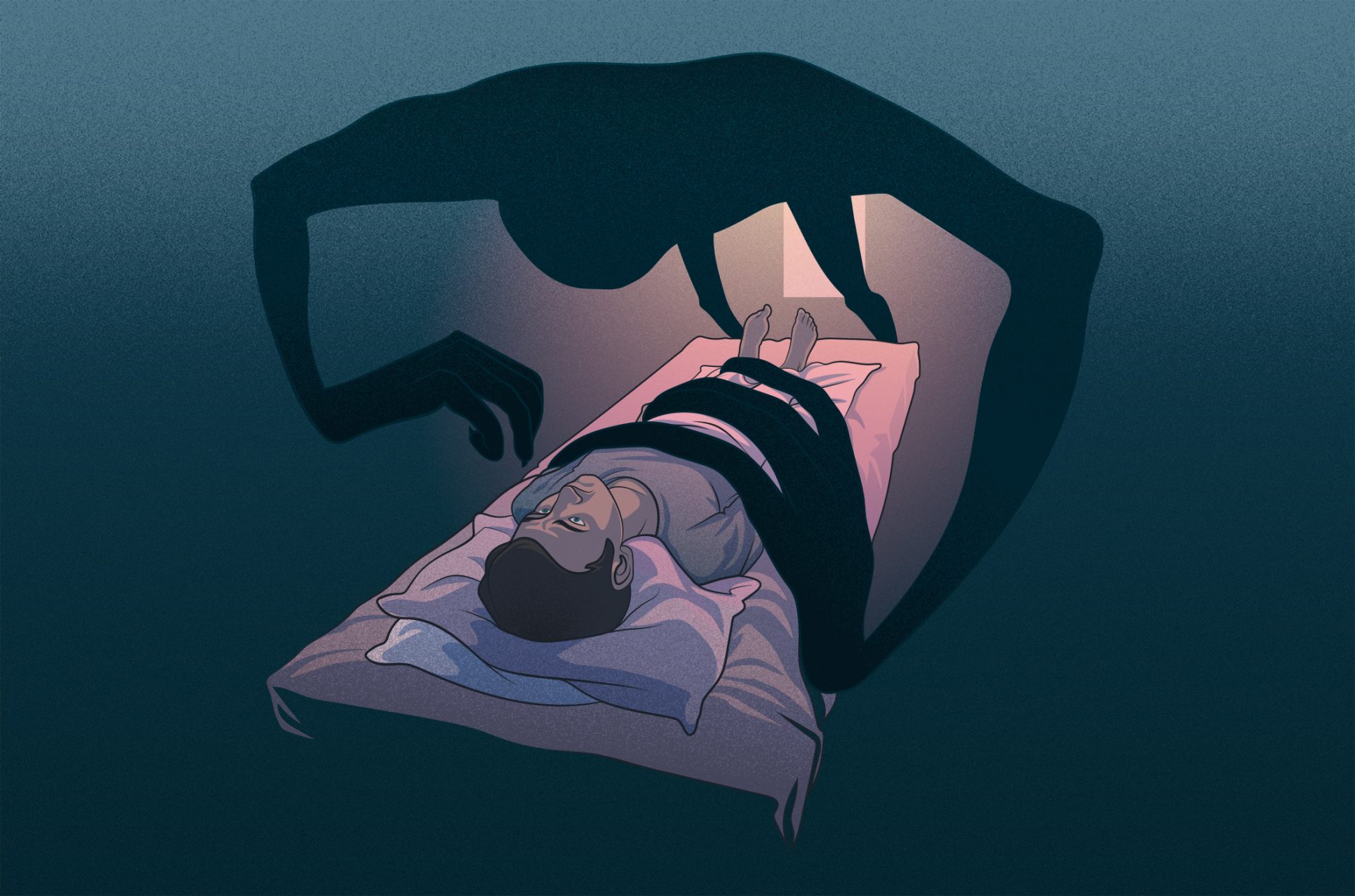
Imagine opening your eyes in the middle of the night, fully awake, yet unable to move or make a sound. An oppressive presence seems to hover around you, and indistinct shadows dance in the gloom. Rest assured, you’re not going crazy: this is a very real phenomenon called sleep paralysis. Let’s explore together what lies behind this terrifying experience and, most importantly, how to avoid becoming a victim of it.
Many people are unaware that sleep paralysis is a more common experience than they realize. Contrary to popular belief, it’s not dangerous to your health, but it can be particularly distressing, especially when it occurs unexpectedly. This disconcerting phenomenon usually happens during the transition between wakefulness and sleep, or vice versa: the mind is perfectly lucid, eyes sometimes wide open, but the body remains completely inert, as if frozen in ice. It becomes impossible to move an arm, speak, or even shout. This striking disconnect between an alert brain and paralyzed muscles often triggers intense panic.
For some, the ordeal doesn’t end there. The episode can be accompanied by very realistic visual or auditory hallucinations: dark figures appearing in the room, strange noises, or whispered voices. All these elements reinforce the feeling of being trapped in a waking nightmare, adding another layer of terror to an already unsettling situation.
The scientific roots of a troubling paralysis
Don’t panic, you’re neither “crazy” nor the victim of a supernatural force – even if some popular legends continue to fuel these beliefs. Sleep paralysis has a perfectly clear biological explanation. During REM sleep, the phase in which we dream most intensely, our brain sends a signal to block muscle activity. This safety mechanism prevents us from physically acting out our dreams. During an episode of sleep paralysis, the brain wakes up prematurely… but the body remains stuck in this state of muscle inhibition. The result: you are conscious, but your physical body continues to “sleep.”
This disruption is often caused by factors we are all too familiar with: chronic stress, recurring lack of sleep, anxiety, irregular bedtimes, or extreme fatigue. In other words, anything that disturbs the natural balance of our sleep cycles can contribute to this phenomenon.

Simple tips to say goodbye to these episodes
Good news: it’s entirely possible to reduce, or even completely eliminate, these disruptive moments. The key lies in better sleep hygiene. Here are some practical and truly effective tips to implement:
Establish a stable sleep schedule: go to bed and wake up at the same time every day, even on weekends, to regulate your internal clock.
Create a calming bedtime ritual: light reading, dim lighting, a relaxing herbal tea…
Put away screens at least an hour before bed: the blue light they emit disrupts the secretion of melatonin, the sleep hormone.
Learn to manage your stress: deep breathing, meditation, yoga… find the method that soothes you most.
Take care of your nighttime environment: a quiet, well-ventilated bedroom with quality bedding can transform your sleep.

What if the episode occurs despite everything?
Even when following these precautions, an episode may still occur unexpectedly. In this case, the most effective approach is to try to remain calm. Easier said than done, of course, but simply knowing that this phenomenon is benign and temporary can help defuse panic. Focus on your breathing, try moving a finger, then a toe. Gradually, your body will emerge from this drowsy state and you will regain full use of your muscles.
