
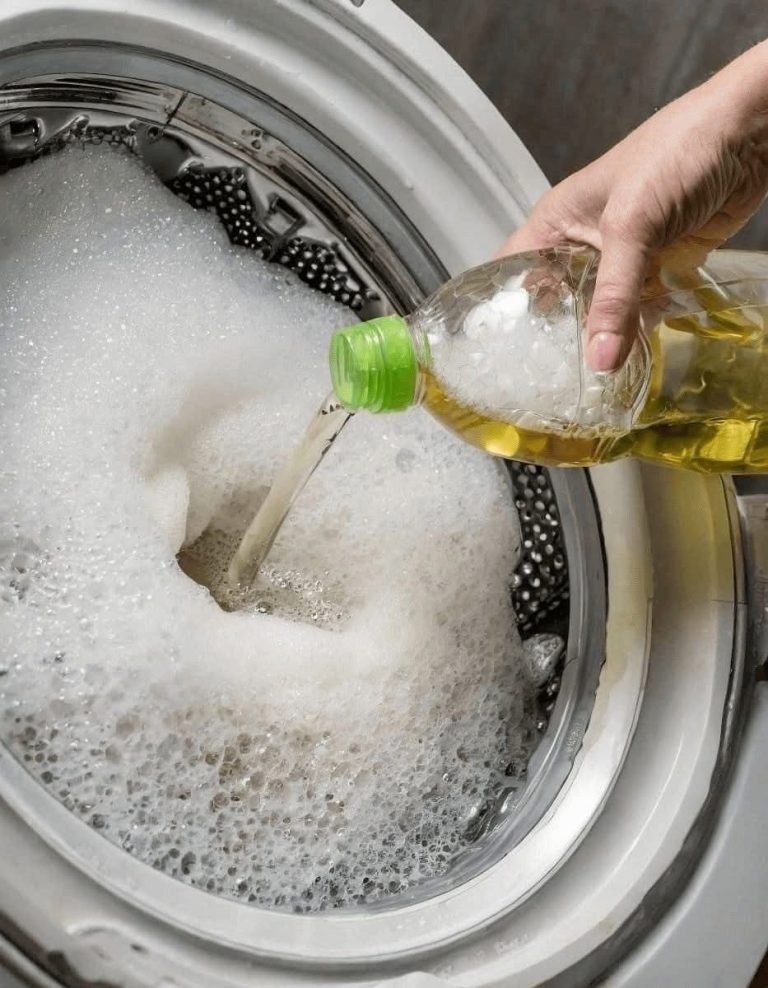
Why does vinegar work for washing clothes? Vinegar, specifically distilled white vinegar, contains acetic acid, a mild but effective acid for dissolving detergent, fabric softener, and hard water mineral residue. This residue can dull fabrics, reduce their absorbency, and even irritate sensitive skin.
Common Mistakes When Using Vinegar on Clothes:
Using Too Much Vinegar
won’t make clothes more effective. In fact, it can cause a lingering odor or damage delicate garments. A little goes a long way.
Pouring It Directly on Clothes
Applying vinegar directly to fabrics can cause discoloration or weaken fibers over time. Always dilute it before use.
Mixing Vinegar and Bleach
is a dangerous combination. When mixed, they produce toxic chlorine gas, which can be harmful to your health.
The Correct Way to Use Vinegar for Washing White Clothes: Add 1/2 to 1 cup of vinegar to your washing machine during the rinse cycle. It helps eliminate detergent buildup and revives the brightness of white clothes.
For softer towels.
Towels can lose their softness due to detergent buildup. Wash a load with 1 cup of vinegar instead of detergent. This not only softens towels but also restores their absorbency.
To eliminate odors.
Vinegar neutralizes unpleasant odors, such as musty smells. Add 1/2 cup to the rinse cycle to leave clothes and towels smelling fresh.
To prevent lint and static.
Vinegar can help reduce lint and static. Use it as a natural alternative to fabric softeners, which often contain chemicals that coat fabrics.
Tips for best results.
Use distilled white vinegar.
Avoid apple cider vinegar or other colored vinegars, as they can stain fabrics.
Use cold water.
Vinegar works well in cold water, which helps protect fabrics and saves energy. Don’t overdo it. Limit your vinegar use to once or twice a month to avoid overexposing your fabrics to the acid.
If you learn to use vinegar correctly, you can transform your laundry routine. Brighter whites, softer towels, and healthier fabric care are just a bottle away.
