
The Secret Ingredient for Tender Meat: How to Use Baking Soda Like a Pro
Have you ever marveled at how restaurants serve up deliciously tender, juicy cuts of meat? If you’ve tried cooking at home, you might know that achieving that level of tenderness can be quite a challenge. Enter baking soda, a common pantry ingredient that offers a simple yet effective way to tenderize meat. By adjusting the pH on the meat’s surface, baking soda can transform your cooking, resulting in softer, juicier meat every time. In this article, we’ll uncover the secrets of using baking soda to tenderize various types of meat and guide you through methods that can make your home-cooked meals shine.
What Is Baking Soda and Why Is It Effective for Tenderizing Meat?
Baking soda, or sodium bicarbonate, is an alkaline compound that can provide a significant advantage in the kitchen. Here’s how it works:
- Raises the surface pH: Baking soda elevates the pH level on the meat’s surface. This increase reduces protein tightening during the cooking process.
- Moisture retention: By mitigating protein contraction, baking soda allows the meat to hold onto its moisture, resulting in a juicier texture.
- Softer texture: When applied correctly, baking soda can change tough cuts into delectably soft bites.
Understanding the science behind baking soda will enable you to use it effectively and transform your cooking methods. Whether you’re cooking chicken, pork, or beef, this method can elevate your meat dishes.
How to Tenderize Meat with Baking Soda
Method 1: Surface Coating for Small Cuts
The surface coating method works wonders on smaller cuts of meat, particularly thin slices intended for stir-frying or quick-cooking recipes.
Steps to Follow:
- Slice the meat thinly against the grain. This helps reduce chewiness.
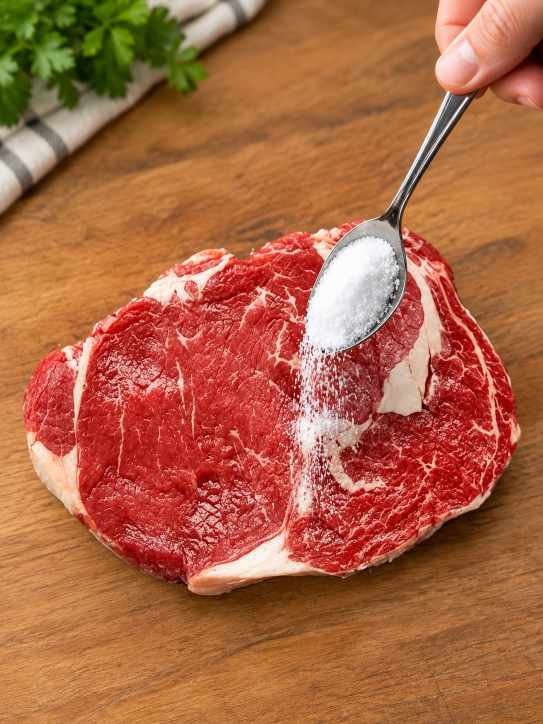
- Sprinkle approximately ½ teaspoon of baking soda per 250 grams of meat uniformly over the surface.
- Allow the meat to rest for 15 to 20 minutes.
- Rinse the meat thoroughly under cold running water to eliminate the baking soda completely.
- Pat the meat dry using clean paper towels and cook it as desired.
Due to the potency of baking soda, avoid overusing it. Adjust the amount and resting time according to the specific cut of meat and recipe requirements.
Method 2: Baking Soda Solution for Larger Cuts
The baking soda solution method is suitable for larger cuts, such as roasts or thicker steaks. However, this technique requires caution, as prolonged soaking could negatively affect the texture.
Steps to Follow:
- Dissolve 1 teaspoon of baking soda in 1 cup of water.
- Submerge the meat in this solution and refrigerate it for 15 to 30 minutes.
- After soaking, remove the meat and rinse it under running water.
- Pat the meat dry and proceed with your preferred cooking method.
For food safety, keep the meat refrigerated throughout the tenderizing process and avoid letting it sit at room temperature for any extended periods. Additionally, ensuring that all surfaces and utensils used are clean will prevent contamination.
Best Types of Meat for Using Baking Soda
Not every cut of meat will benefit from baking soda tenderization. Here are the types that do:
- Beef: Thinly sliced flank steak, skirt steak, or any tough cuts that require softening for stir-fry.
- Chicken: Chicken breast sliced thin for quick-cooking dishes like stir-fries and tacos.
- Pork: Thin slices of pork intended for fast cooking can also benefit from this technique.
- Stir-fry meats: Any small, evenly cut pieces that are cooked quickly over high heat.
Generally, premium cuts that are already tender may not require this method, but in cases where you’re using tougher cuts or budget-friendly meats, baking soda can prove invaluable.
When to Use Baking Soda for Tenderizing Meat
This effective technique can be particularly useful in several cooking situations:
- For beef and chicken stir-fries where quick cooking is essential.
- When preparing budget-friendly cuts of meat that require extra tenderness.
- During meal prep involving sliced meat for fast, easy dinners.
Bear in mind that for slower cooking methods, other techniques might be more appropriate depending on the type of meat and desired outcome.
Important Tips for Best Results with Baking Soda
To achieve optimal results using baking soda to tenderize meat, follow these important tips:
- Use sparingly: Too much baking soda can alter the flavor and create an undesired texture.
- Rinse thoroughly: Ensure all baking soda residue is washed away to avoid any unpleasant flavors.
- Avoid excessive tenderizing time: Leaving meat in baking soda for too long can lead to a mushy texture.
- Enhance flavors post-tenderizing: Once rinsed, consider marinating or seasoning the meat to add flavor.
- Slice against the grain: Cutting the meat across the muscle fibers will make it easier to chew.
- Cook safely: Always use a food thermometer to check that meat reaches a safe internal temperature.
Common Mistakes to Avoid When Using Baking Soda
To get the most out of baking soda for tenderizing, be aware of these common pitfalls:
- Do not skip the rinsing step after using a baking soda method.
- Avoid using excessive amounts of baking soda, which can cause unwanted taste.
- Don’t leave the meat in the solution for too long; stick to the recommended time.
- Don’t apply this method unnecessarily on already tender cuts.
- Ensure raw meat is kept refrigerated to prevent bacterial growth during the tenderizing process.
Comparing Baking Soda with Other Tenderizing Methods
When it comes to achieving tender meat, there are several methods available. Here’s how baking soda compares to popular alternatives:
| Method | Effectiveness | Flavor Impact | Best For |
|---|---|---|---|
| Baking Soda | Highly effective for thin, quick-cooking meat cuts | Minimal if rinsed properly | Thinly sliced meats |
| Salt Brine | Helps retain moisture | Can add saltiness | Meats that benefit from seasoning |
| Acid Marinade | Affects surface texture | Adds acidity and tang | Grilled or barbecued meats |
| Mechanical Tenderizing | Physically breaks down tissue | No direct flavor impact | Uniform thickness cuts |
Each method holds its unique merits, and the right choice hinges on the specific cut of meat and desired flavor profile. Baking soda is ideal for quickly transforming thinly sliced meat into tender, mouthwatering dishes.
Does Baking Soda Change the Taste of Meat?
When utilized appropriately and rinsed adequately, baking soda should not significantly alter the flavor of your meat. However, using too much or neglecting the rinsing may introduce an unpleasant alkaline taste. Always use a modest amount to achieve the best results.
Conclusion
Mastering the art of tenderizing meat with baking soda can elevate your home cooking to new heights. It’s a straightforward technique that, when performed correctly, yields remarkable results. With a deeper understanding of how baking soda works and the various methods to utilize it, you can confidently create tender, flavorful dishes that will impress
