
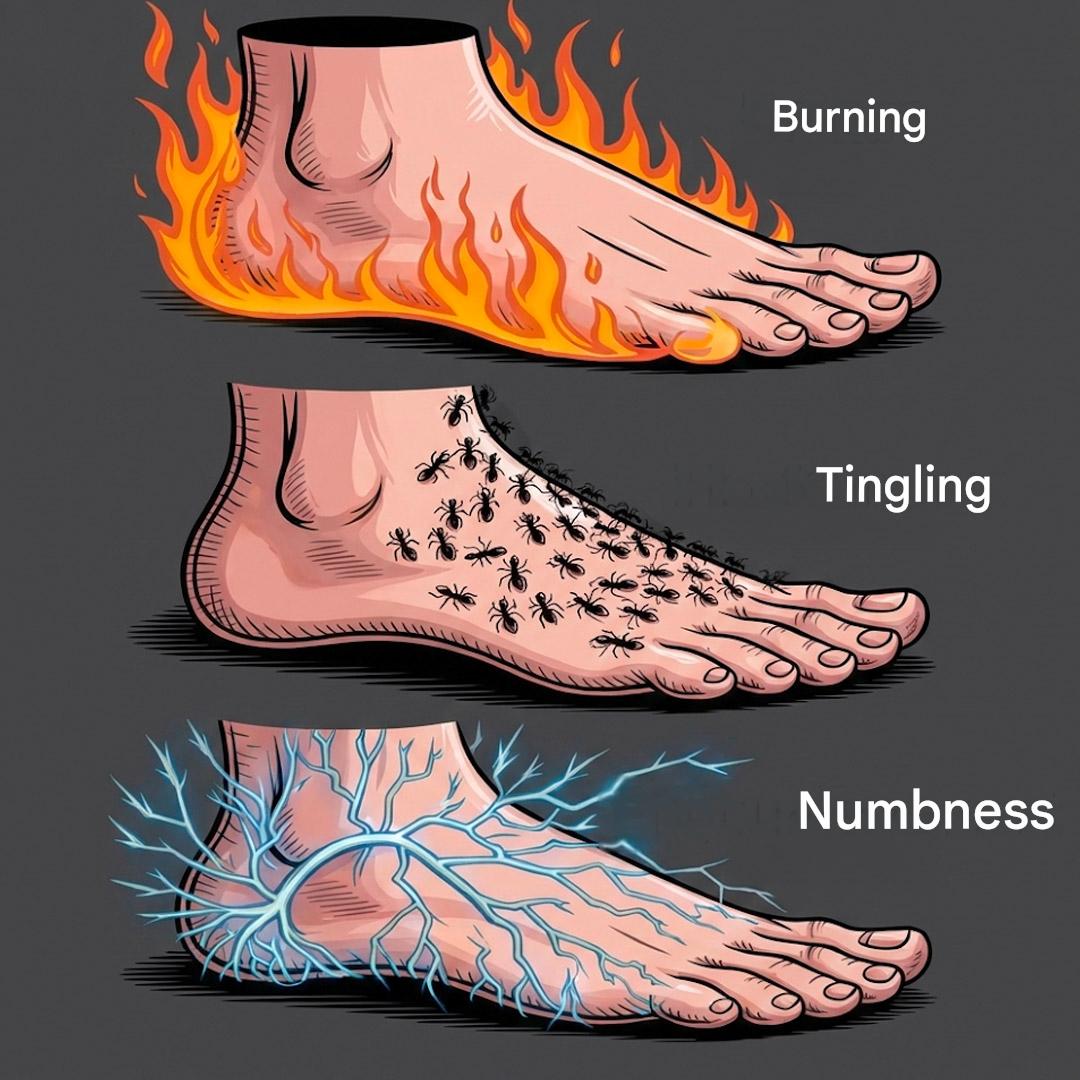
A burning sensation in the feet: a sign that should not be ignored
Do you experience burning sensations, especially at night, as if your feet were “on fire”? This type of discomfort may be related to irritation of the peripheral nerves.
Certain conditions, such as blood sugar imbalances, vitamin B12 deficiency, thyroid disorders, or poor blood circulation, can contribute to these sensations. The World Health Organization notes that peripheral neurological disorders affect a large number of adults worldwide.
If these burning sensations disrupt your sleep or become frequent, it is advisable to speak to your doctor. A blood test and a physical examination may be enough to identify the cause and prevent potential complications.
Tingling: when the “needles” last too long
It’s common to experience a “numb” leg after sitting for a long time. However, if the tingling becomes regular, spreads, or occurs for no apparent reason, it’s important to be vigilant.
These sensations can be linked to nerve compression, vitamin deficiency, or tension in the spine. In some cases, they may indicate an early-stage neurological disorder.
The best approach is to note the frequency, duration, and intensity of symptoms. A single episode is usually benign. Repeated episodes warrant medical attention.
Numbness: a symptom to take seriously
A loss of sensation in the feet or toes is never insignificant. It can increase the risk of injuries that go unnoticed immediately.
Sudden numbness, especially if accompanied by muscle weakness, difficulty walking, balance problems, or facial asymmetry, requires prompt medical attention. In some cases, it may constitute a medical emergency.
It is always better to consult as a precaution than to delay a diagnosis.
Why are the legs often the first to be affected?

The nerves and blood vessels in the lower limbs are long and under considerable strain. In the event of an imbalance in the body, the extremities may be affected first.
It’s a bit like a warning light that comes on before a more serious breakdown. Spotting these signs early allows for more effective action.
When to consult a doctor?
Here are the situations that justify making an appointment:
- Symptoms have persisted for several days
- Sensations intensifying
- Associated pain
- Muscle weakness
- Balance disorders
- Sudden onset of symptoms
A healthcare professional can prescribe appropriate tests to identify the source of the problem.
The right thing to do: don’t ignore your body
We tend to get used to discomfort and minimize it. Yet, our body is constantly communicating.
Paying attention to those tingling sensations in your legs or other unusual feelings doesn’t mean giving in to anxiety, but rather adopting a preventative approach. Because listening to your body’s signals today can sometimes prevent complications tomorrow.
