
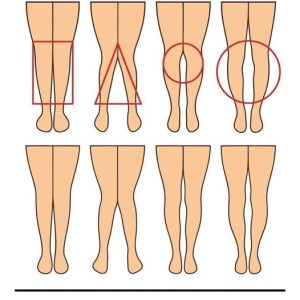
Some people claim that crossing the legs automatically indicates nervousness or defensiveness.
In reality, there can be many ordinary reasons for doing it.
Someone may find the position comfortable. They may be sitting in a particular chair, copying a familiar habit, adjusting their posture, or simply resting.
The surrounding situation matters much more than one isolated movement.
If someone repeatedly changes position during a conversation, for example, it could reflect discomfort—but it could just as easily mean the chair is uncomfortable.
Shoes Can Change the Way You Move
Footwear also plays a significant role.
Different shoes can affect stride length, balance, foot placement, and overall comfort. A person wearing athletic shoes may move differently from someone wearing formal footwear.
This is one reason why judging someone’s personality from the way they walk can be unreliable.
You may not be observing their natural movement at all.
You may simply be seeing how they adapt to what they are wearing.
Posture and Everyday Habits
Although posture does not provide a reliable personality test, it can sometimes reflect everyday habits.
People who spend many hours sitting at a desk may develop movement patterns associated with prolonged sedentary behavior. Someone who regularly participates in physical activities may have different movement habits.
Stress and fatigue can also influence how comfortable a person feels while standing or moving.
But again, one observation is rarely enough to explain why someone moves a particular way.
A better approach is to look at patterns over time rather than making conclusions from a single moment.
Fashion Can Change the Visual Impression
Clothing can also influence how a person’s movement appears.
Loose trousers may create a different visual effect from fitted clothing. Long skirts, athletic clothing, boots, or other footwear can all change the appearance of a person’s stride.
This doesn’t necessarily tell you anything profound about their personality.
It simply demonstrates how clothing and movement interact.
Fashion can certainly be a form of self-expression, but it is better understood through a person’s choices as a whole rather than through assumptions based on one item of clothing.
The Problem With Viral Body-Language Claims
Online articles and social media posts often present body-language observations as if they were universal rules.
For example, a particular foot position may supposedly “prove” confidence, while another is said to reveal insecurity.
Human behavior is much more complicated.
Body language can provide useful context, but individual gestures rarely have one fixed meaning. The same movement can mean different things depending on the person, environment, culture, physical condition, and situation.
That is why professional communication and psychology generally avoid treating a single gesture as definitive evidence of someone’s thoughts or personality.
Focus on Function, Not Appearance
Perhaps the most useful way to think about your legs is not as something that needs to match an appearance standard, but as an important part of how you move through life.
Your legs help you walk to school or work, climb stairs, participate in activities, explore new places, and maintain your independence.
Their appearance naturally varies.
There is no need to compare your body with photographs online or with an unrealistic standard presented as the “perfect” shape.
Bodies are built differently, and normal variation is part of human biology.
When Changes in Movement Matter
While ordinary differences in walking style are usually nothing unusual, a sudden or persistent change in movement can sometimes deserve attention.
For example, ongoing pain, unexplained weakness, difficulty with balance, swelling, numbness, or a noticeable change in the way someone walks may be worth discussing with a qualified healthcare professional.
The important distinction is between a person’s normal movement pattern and a new change that affects comfort or daily activities.
A Better Way to Read Body Language
The next time you notice someone’s posture or walking style, consider the context before drawing conclusions.
Instead of thinking, “That person stands this way, so they must have a certain personality,” ask yourself what other explanations might exist.
Maybe they are tired.
Maybe their shoes are uncomfortable.
Maybe they are concentrating.
Maybe they simply have a different natural posture.
That small change in perspective can make body language much more interesting—and much less judgmental.
Your legs do communicate something about you, but the message is not a secret personality code.
They reflect movement, habits, environment, physical differences, and the countless ordinary ways people navigate the world.
Every person moves differently.
And sometimes, the most interesting thing your legs reveal isn’t who you are psychologically.
It’s simply how uniquely your body helps you move through life.
