
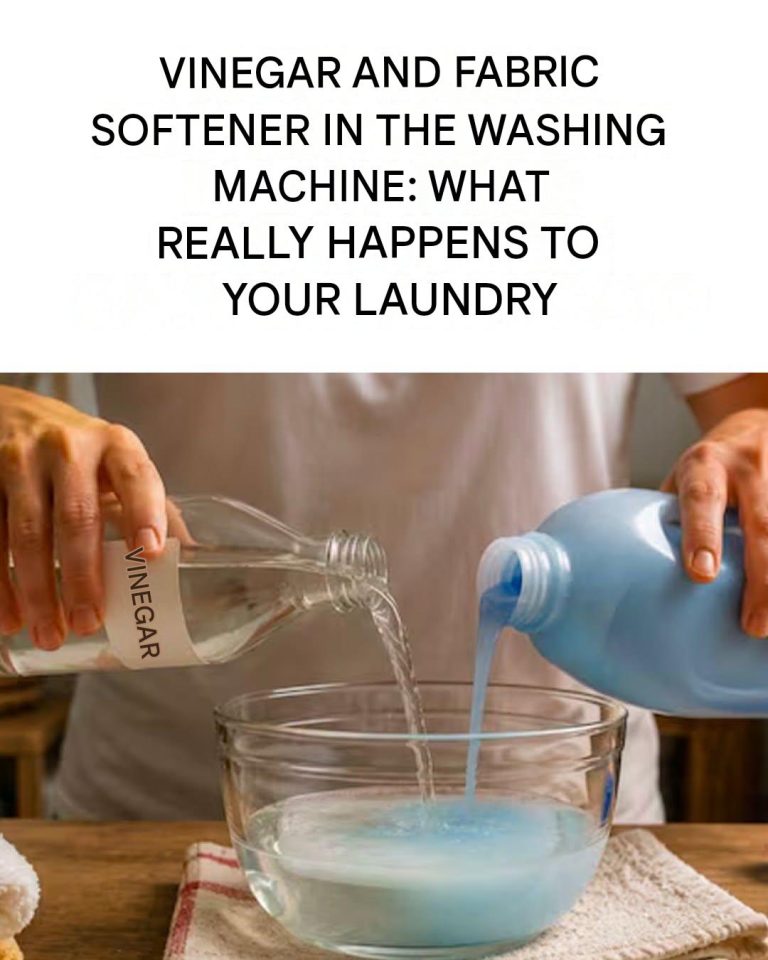
Using vinegar and fabric softener together in the washing machine: is it a smart laundry hack or a mistake? Here’s what really happens to your clothes, your washing machine, and the proper way to use vinegar in your laundry routine.
Edited by Editorial Staff
Using vinegar in the washing machine has become a popular household trick for people looking for a natural alternative to conventional laundry products. Many add white vinegar to their laundry to help soften fabrics, eliminate odors, and reduce detergent residue.
But what happens if you use vinegar and fabric softener in the same wash? The answer may surprise you: combining the two is generally not recommended because it can reduce the effectiveness of both products.
Why You Shouldn’t Use Vinegar and Fabric Softener Together
Vinegar is acidic, while traditional fabric softeners contain conditioning agents specifically designed to coat fabric fibers, making them feel softer and leaving behind a pleasant fragrance.
When used together, these products can interfere with one another. The acidity of the vinegar may reduce the performance of the fabric softener, making its fragrance and softening effects less effective.
As a result, you may end up wasting both products without gaining any additional benefit for your laundry.
What Happens If You Use Too Much Vinegar?
Vinegar is often used to help remove odors and detergent residue, but moderation is important.
Using a small amount occasionally can help keep laundry fresh and reduce buildup. However, using large amounts or adding vinegar too frequently may gradually affect certain delicate fibers and shorten the lifespan of some garments.
Delicate fabrics such as wool and silk require extra care because they can be more sensitive to acidic substances.
Keep reading — tap the button below to continue.
The Correct Way to Use Vinegar in the Washing Machine
If you choose to use vinegar in your laundry routine, think of it as an alternative to fabric softener rather than something to use alongside it.
Simply pour a moderate amount of distilled white vinegar into the fabric softener compartment instead of using a commercial fabric softener. During the final rinse cycle, it can help reduce detergent residue and leave fabrics feeling fresher.
Vinegar or Fabric Softener: Which Is Better?
The right choice depends on what you want to achieve.
Fabric softener is specifically formulated to leave clothes feeling soft while adding fragrance and reducing static.
Vinegar, on the other hand, is often preferred by people looking for a simpler, fragrance-free option that may help reduce residue and odors without adding extra chemicals.
Rather than using both together, choose the option that best matches your laundry needs.
Don’t Forget Washing Machine Maintenance
Using excessive amounts of any laundry product can lead to residue buildup inside your washing machine. Over time, detergent and fabric softener can accumulate in the detergent drawer, rubber door seal, and drum, contributing to unpleasant odors.
To keep your washing machine working efficiently:
Keep reading — tap the button below to continue.
Clean the detergent drawer regularly.
Wipe and dry the rubber door seal after use.
Leave the washing machine door slightly open between washes when possible.
Run a maintenance cycle periodically according to the manufacturer’s instructions.
Final Thoughts
Vinegar can be a useful addition to your laundry routine when used correctly, but it should not be viewed as a way to enhance the performance of fabric softener. Using either product appropriately—and not together—can help you achieve cleaner, fresher laundry while avoiding unnecessary waste.
Keep reading — tap the button below to continue.
