
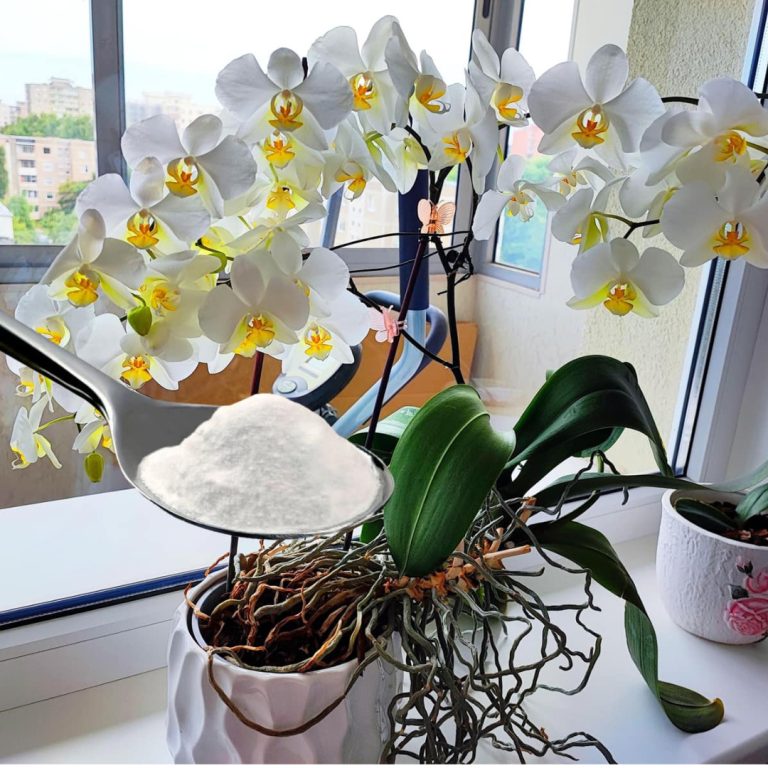
If you love orchids, you’ve probably bought or received one as a gift and helplessly watched its beautiful blooms wither . Orchids are as beautiful as they are difficult to care for, but how do florists ensure that orchids bloom?
In reality, there is no special tip or magic formula, but rather a series of basic care and tips for a healthy and therefore flowering plant.
Generally speaking, orchids do not tolerate direct sunlight. They are also unsuitable for outdoor cultivation, especially in locations where temperatures can drop below 15°C and rise above 30°C, and in excessively dry environments.
It’s also important to know that orchids bloom in spring, after their winter dormancy. If we have an orchid without flowers in winter, we’ll have to wait. If we buy a flowering plant in winter, it’s almost certain that it came from a greenhouse with artificial conditions and will therefore suffer in a home environment.
If we have an orchid without flowers and want it to bloom, we must definitely follow the precautions listed below.
1. Find a well-lit area
Most orchids prefer bright spots, but without direct sunlight. The higher the ambient light level, the more likely they are to bloom during their next active period. The ideal location is near a window.
2. Ensure adequate substrate moisture.
They require excellent drainage and minimal risk of waterlogging. These are parasitic tropical plants that grow on trees and live in ambient humidity. They need high humidity but not moist substrate.
They should be watered in winter, but when the weather is dry and the radiators are on, this should definitely be done (never more than once a week).
Observe the container up to the light; if moisture is still visible at the bottom, it should not be watered. However, if it is dry, add water, always distilled.
In very dry locations, it is advisable to place a humidifier on the orchid leaves daily or to mist them with water. It is also a good idea to avoid placing the plant in excessively humid areas, such as busy bathrooms.
3. Fertilize frequently
For orchids to bloom, they require a special fertilizer formulated for this type of plant, which is available at garden centers and nurseries. Without fertilizer, flowering is unlikely. It is generally sold in liquid form and added to the watering can.
The orchids that come from the greenhouses are already well fertilized, but after a few months we need to start caring for them with fertilizer as well.
4. Ensure good temperature contrast
To bloom, orchids require a very good temperature contrast in the weeks leading up to spring. This contrast is typically around 10°C between the nighttime minimum and the daytime maximum, always adhering to the threshold values of 15°C and 30°C.
To achieve the correct temperature, you can also move the plant from a warmer to a cooler location within 24 hours.
